A long-term redevelopment partnership
A COMMUNITY DESTINATION. A PUBLIC DECISION. THE NEXT CHAPTER.
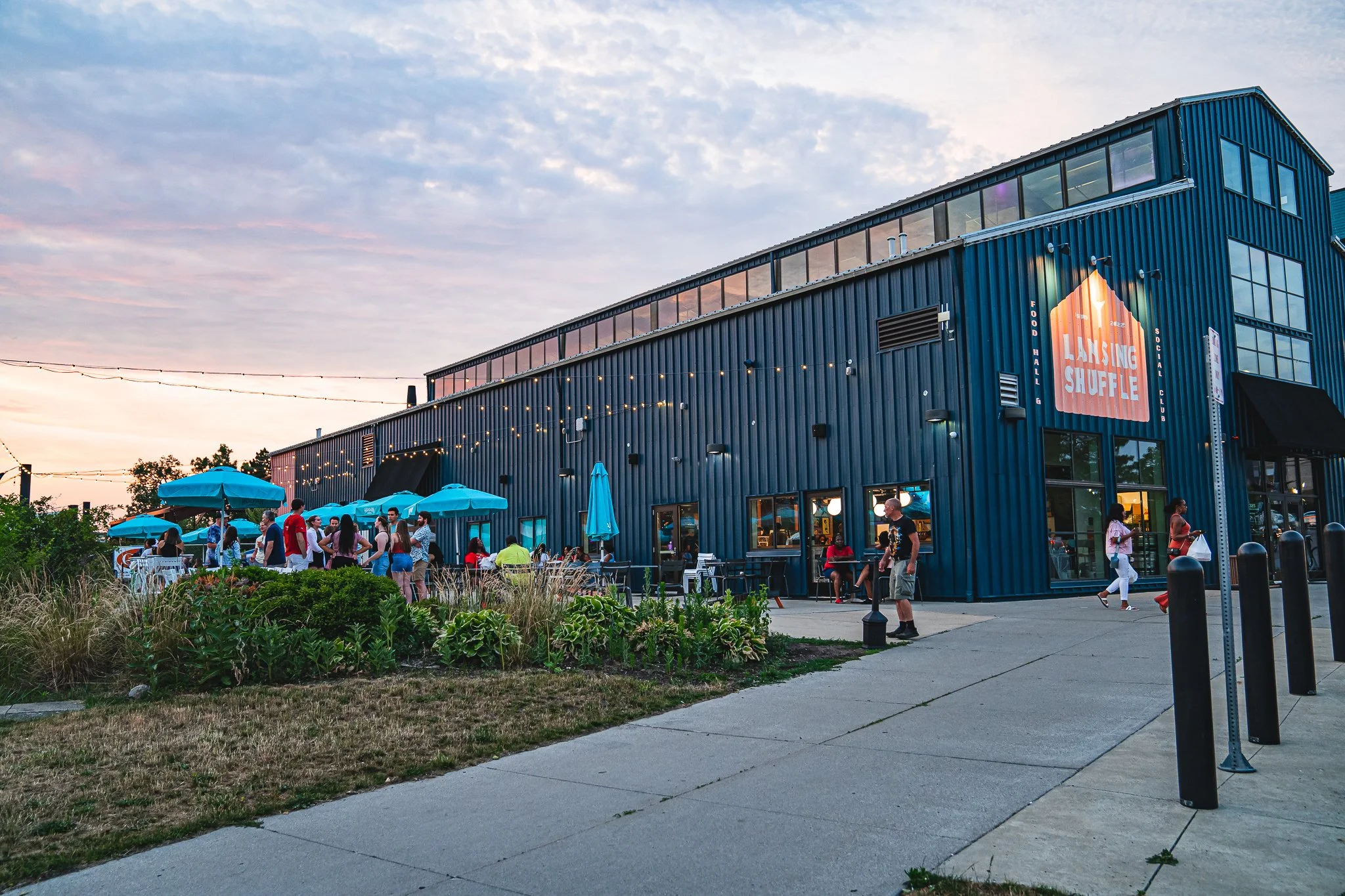
Lansing Shuffle began with a vacant former City Market and a shared goal: bring people, activity and new life back to the riverfront. The August 4 ballot proposal asks voters whether the City may move forward with the potential sale of the Lansing Shuffle property.
1. THE OPPORTUNITY
The former City Market needed a new purpose and a realistic path to redevelopment.
2. THE INVESTMENT
Private investors committed approximately $4 million to construction, building systems, design, financing and project execution.
3. THE OPERATION
Lansing Shuffle assumed the operating risk, maintenance burden and responsibility for creating a destination people would use.
4. THE RESULT
The riverfront gained restaurants, bars, shuffleboard, events, jobs and a gathering place for the community.
The story
FROM VACANT MARKET TO ACTIVE DESTINATION.
The project combined a City-owned building, substantial private investment, independent food businesses and years of operating work. The result is a place built around food, entertainment, events and shared experiences.
How the partnership worked
DIFFERENT CONTRIBUTIONS.
ONE REDEVELOPMENT.
The City and Lansing Shuffle did not contribute the same things. The City provided the opportunity and retained legal ownership. Lansing Shuffle supplied the capital, redevelopment work and ongoing operating responsibility.
LANSING SHUFFLE PROVIDED
Approximately $4 million of private investment
Construction, design and redevelopment management
Restaurants, bars, entertainment and event programming
Operating risk and ongoing building responsibility
A new destination designed to draw people downtown
THE CITY PROVIDED
The existing City Market building and site
A redevelopment opportunity on the riverfront
A lease structure that allowed the project to move forward
Public review and oversight of any future sale
Why this is happening now
THE AGREEMENT CREATED A PROCESS. NOT A PROMISE.
The original lease intentionally required Lansing Shuffle to operate for three full lease years before it could even ask the City to begin considering a sale. That waiting period gave the City and the public time to evaluate the partnership.
STEP ONE
The City selected a redevelopment partner and entered into a public lease for the former City Market.
STEP TWO
Lansing Shuffle invested in the building, completed the redevelopment and opened the operation.
STEP THREE
The project operated through the required proving period while the City retained ownership.
STEP FOUR
After three full lease years, Lansing Shuffle became eligible to request that the City begin considering a sale.
STEP FIVE
Because the property is park-designated land, voters must authorize the City to proceed before any sale can be completed.
NOTHING WAS GUARANTEED.
The lease allowed a request to be made after the waiting period. The City retained decision-making authority, and the public vote is part of that process.
Ownership and responsibility
LEGAL OWNERSHIP TELLS ONLY PART OF THE STORY.
The City owns the property, but Lansing Shuffle already carries many of the costs and responsibilities normally associated with ownership.
Responsibilities carried by Lansing Shuffle
Roof repairs
HVAC systems
Exterior maintenance
Building maintenance
Capital repairs
Operating risk
Private investment
Programming and activation
Why ownership matters
A FINANCING STRUCTURE BUILT FOR THE LONG TERM.
Approximately $4 million was invested into a property Lansing Shuffle does not own. Leasehold projects generally have fewer financing options and shorter repayment periods than owned real estate. Ownership would make longer-term refinancing possible.
01: Current structure
Major permanent investment sits inside a leased building.
02: Limited financing
Without ownership, available financing is shorter and more expensive.
03: Ownership
The property can serve as real-estate collateral for a longer-term loan.
04: Greater stability
Lower annual debt pressure creates more capacity for maintenance and reinvestment.
Questions we have heard
CLEAR ANSWERS TO REASONABLE CONCERNS.
The proposal involves a public asset, private investment and park-designated property. People should ask questions. Here are the central issues in plain language.
Was the property promised to Lansing Shuffle?
No. The lease created a process that allowed Lansing Shuffle to request consideration of a sale after three full lease years. It did not guarantee that a sale would occur.
Is Rotary Park being sold?
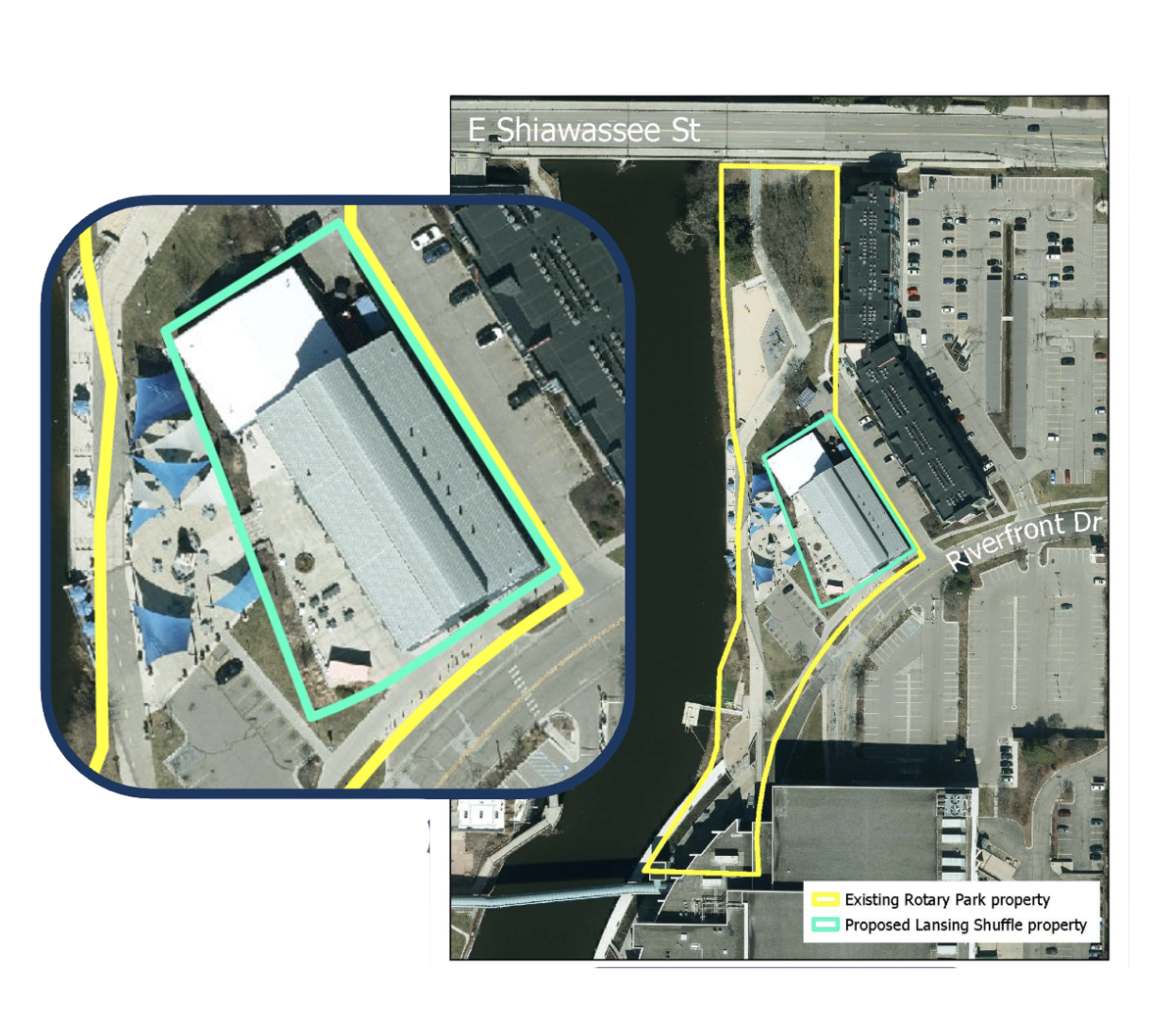
The proposal concerns the defined Lansing Shuffle property. The surrounding public park and riverfront amenities are separate.
Why not simply continue leasing?
The lease may continue, but the financing problem also continues. Ownership would give Lansing Shuffle access to real-estate financing with a longer repayment period and lower annual debt burden.
Is this a discounted sale of a building improved with public money?
The building people see today reflects approximately $4 million of private redevelopment spending. The original agreement established a valuation process tied to the property before those private improvements were installed. A property valuation was performed by an independent party to set the agreed upon purchase price.
Why did the City require a three-year wait?
The City wanted Lansing Shuffle to prove that it could operate successfully and contribute positively before a sale could even be considered. The waiting period functioned as a public safeguard.
What happens if voters do not authorize the sale?
The existing lease remains in place, along with the current financing limitations and repair obligations. Lansing Shuffle would continue evaluating its options, but no specific outcome should be presented as automatic.
Why not sell the building but keep the land?
Separating a commercial building from the land beneath it generally makes conventional real-estate financing much more difficult because the lender lacks clear collateral rights in the full property.
What does a yes vote actually do?
It authorizes the City to proceed with the potential sale of the defined property. It does not erase the remaining public process, final documentation or any protections the City may require.
Mood.
Moment.
Memory.
Buildings matter because of what happens inside them: families gathering, friends reconnecting, local businesses serving customers, and people making memories downtown.
When we first saw the former City Market, we did not see an easy investment. We saw a building that had lost its purpose and the possibility of bringing people back to the riverfront.
We invested in the structure, but we also invested in an idea: that a place centered on food, play, events and shared experiences could become part of Lansing’s daily life.
What makes us proud is seeing people together and enjoying themselves. We hope to continue caring for and investing in this place for decades. We also understand that this is a public decision.
Thank you for taking the time to understand how Lansing Shuffle came to be, why the question is before voters now, and what the next chapter could mean.
The Lansing Shuffle Team
If you have any questions, please email us at ownership@lansingshuffle.com.